Entry into a roundabout

Sven Meier
Driving teacher and President
of Verkehrsschule Zug
A SchlauMeier—who doesn’t know one? But a SchlauMeier is by no means just a know-it-all. Rather, it is a person who impresses with well-thought-out contributions and clear, understandable explanations, thereby enriching their surroundings. This is exactly the intention of Sven Meier, driving instructor and president of the Verkehrsschule Zug, in this diverse column
How is entry into a roundabout regulated when there is a bus next to me?
Imagine the following situation: You are approaching a roundabout, with a bus next to you. Both are slowly rolling toward the entry—and suddenly there is honking, angry looks, or wild gesturing. The key question often arises: Who actually has the right of way? It’s time to shed some light on the matter before half the roundabout turns into a theatre stage.
In principle, there are two different situations when entering a roundabout. And these differences repeatedly cause misunderstandings.
Case 1 – The car has right of way
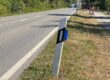
Let’s first look at Chamerstrasse in Steinhausen. There, a bus lane runs on the right toward the roundabout, while general traffic travels on the left. Both lanes continue right up to the roundabout. Inside the roundabout itself, however, there is only one lane.
And here it gets interesting: in this situation, the car has priority over the bus. Yes, really—this is one of the rare cases where the large, majestic-looking city bus does not have the right of way.
The reason lies in the law: according to Article 41b paragraph 1 of the Swiss Road Traffic Act (SVG), traffic approaching from the left in a roundabout has priority. So if the car is to the left of the bus and both enter the roundabout at the same time, the car has the right of way.
There is even a Federal Supreme Court ruling confirming this—and an angry look from the bus driver does not change anything.

Illustration: Car has right of way over bus (Chamerstrasse, Steinhausen)
Case 2 – The bus has right of way
The situation is completely different, for example, on General-Guisan-Strasse in Zug direction train station.
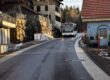
There, the road narrows to a single lane before the roundabout. This means that general traffic must change lanes before the roundabout and cross a solid white line.
And when changing lanes, the same rule always applies: whoever changes lanes does not have priority! (SVG Art. 44 para. 1)
This means: the bus stays in its lane and therefore has right of way over the merging car. Anyone trying to squeeze in front of the bus here will quickly realize that although a bus looks patient, it cannot magically shorten its braking distance.

Illustration: Bus has right of way over car (General-Guisan-Strasse, Zug)
The decisive factor is the approach
So the key question is not: “Is it a bus?” but rather: “How is the approach to the roundabout designed?”
If there are two continuous lanes up to the roundabout and you are on the left of the bus, then you have right of way. If the lanes merge before the roundabout and you need to change lanes, then the bus has priority.
In everyday life, this remains a small adventure despite being logically structured.
Consideration helps more than honking
As in so many areas of traffic, mutual consideration gets everyone to their destination more calmly. Clear communication through speed and driving behavior helps a lot and keeps traffic flowing.
If, for example, you decide in Steinhausen to let the bus go first, then slow down early and clearly. The bus driver can better anticipate your intention and may even respond with a small smile.
Because in the end, we all want the same thing: to get through the roundabout safely, stress-free, and with as little drama as possible.
With that in mind, I wish you a safe and accident-free journey.